Key Takeaways
A summary of key takeaways from the Guide on how organizations that coordinate and support OST programs can help providers in their communities build life skills for youth.
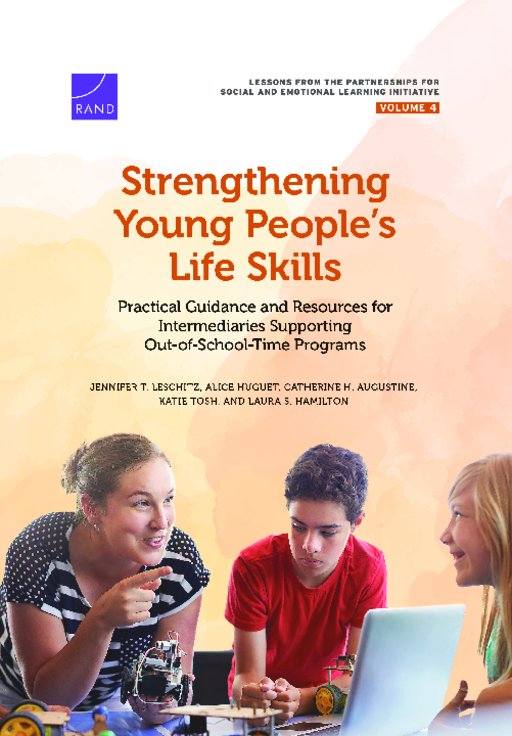
Strengthening Young People’s Life Skills
Practical Guidance and Resources for Intermediaries Supporting Out-of-School-Time Programs
This report offers tips, no-cost tools, and real-world examples and resources for organizations that support out-of-school-time (OST) providers in building young people’s life skills.
June 2026

Table of Contents
Overview
More
Less
Overview
More
Less
Research Approach
Document
- Author(s)
- Jennifer T. Leschitz, Alice Huguet, Catherine H. Augustine, Katie Tosh, and Laura Hamilton
- Publisher(s)
- RAND Corporation
Page Count
98 pages
WHO IS THE WALLACE FOUNDATION?
We are an independent research foundation helping communities build a more vibrant and just future. We work in the arts, education, and youth development sectors. With our partners and grantees, we seek to solve problems and improve people's lives. The evidence-based research we share supports policymakers and practitioners working to enhance community vitality and help all people reach their full potential. Learn more about our focus areas.
Summary
How we did this
RAND drew on data from its study of the Wallace-funded Partnerships for Social and Emotional Learning Initiative. The initiative involved more than 100 out-of-school-time (OST) programs in six communities—Boston; Dallas; Denver; Palm Beach County, Fla.; Tacoma; and Tulsa. Data included surveys and interviews, observations of program activities, and program documents.
Young people who have strong life skills—such as self-awareness, teamwork, perseverance, and responsible decision making—tend to do better in school, have better health and relationships, and enjoy greater overall well-being than those who do not. Out-of-school time (OST) programs play a key role in helping young people learn and develop these skills.
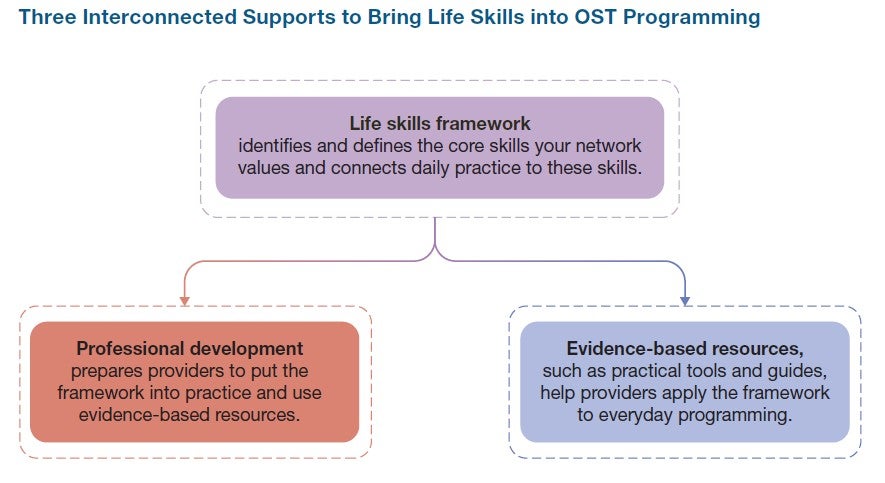
There is an opportunity for intermediaries and other organizations that coordinate and support OST programs to help program providers in building students’ life skills through three strategies in particular:
- Establishing a life skills framework to guide programming and practice
- Connecting providers to evidence-based resources that support effective life skill development
- Offering opportunities for professional development to bolster staff members’ abilities and confidence
A life skills framework identifies and defines the specific life skills for programs to target. RAND recommends the following when establishing a framework:
- Get input from a range of stakeholders, including OST providers, young people, families, schools, and community leaders
- Become familiar with widely used life skills frameworks to determine which specific skills and models might be relevant
- Choose an approach that fits the community’s needs, whether it’s adapting an existing framework or creating a new one
- Provide materials, tools, and training to help staff connect priority life skills to program activities
- Consider hosting a convening to introduce the framework, share examples of how it works, and inspire providers to try it
OST programs in the study used three approaches to building students’ life skills, each with its own recommended resources included in the guide:
- Establishing short routines, like welcoming activities, sharing circles, and brain breaks—Resources include examples and clear written guidelines that spell out the purpose and timing of each routine and the specific life skill it targets.
- Connecting life skills to regular program activities—Resources include activity planning templates and written guidelines.
- Providing direct instruction—Resources include guides and worksheets developed by intermediaries and tailored for OST settings with guidance on how to adapt them as needed.
RAND’s tips for high-quality professional development to foster life skills include the following:
- Create a year-long professional development calendar that starts with the basics and and goes more in depth over time
- Include opportunities for staff to practice routines and strategies they will use with students
- Give staff opportunities to work on strengthening their own life skills
- Offer professional development in various formats, including workshops, virtual sessions, and peer learning communities
- Tailor training to specific staff roles and levels of experience
- Work with coaches, technical assistance providers, or local partners who are knowledgeable about life skills and OST programs

Young people who have strong life skills—such as self-awareness, teamwork, perseverance, and responsible decision making—tend to do better in school, have better health and relationships, and enjoy greater overall well-being than those who do not.
Key Takeaways
- Three ways intermediaries and other organizations can help OST programs build student’s life skills are by encouraging them to establish a framework, providing evidence-based resources, and offering professional development.
- To choose a life skills framework, organizations are encouraged to listen to students, families, program staff, and other voices and choose an approach that fits the community’s needs.
- OST programs in the study used three approaches to building students’ life skills, each with its own written guidelines, examples, and templates: establishing short routines, connecting life skills to regular program activities, and providing direct instruction.
- Professional development should give staff opportunities to practice life skills routines and strategies they will use with students and work on their own life skills, as well.
- Intermediaries faced several obstacles to helping programs with their life skills’ efforts, including limited time, staffing, and funding; competing priorities; ongoing OST staff turnover; and inconsistency in how different programs in a given community approached life skills development.
Visualizations
Materials & Downloads
Planning Tools & Templates
This companion resource contains the five planning tools shown in Appendix B of the guide, along with editable templates.
Infographic
Nine tips to boost social and emotional learning in schools and OST programs.
SEL + OST = Perfect Together
This report explores how OST programs can support children’s social and emotional well-being with guidance from skilled, trusted adults.
Podcast: Social and Emotional Learning In and Out of School
This podcast episode looks at how schools and OST programs help build SEL skills, including the use of a walk-through tool, professional development, and shared rituals to create more consistent SEL instruction.
Topics:
Now Viewing:
Overview
Next: Research Approach