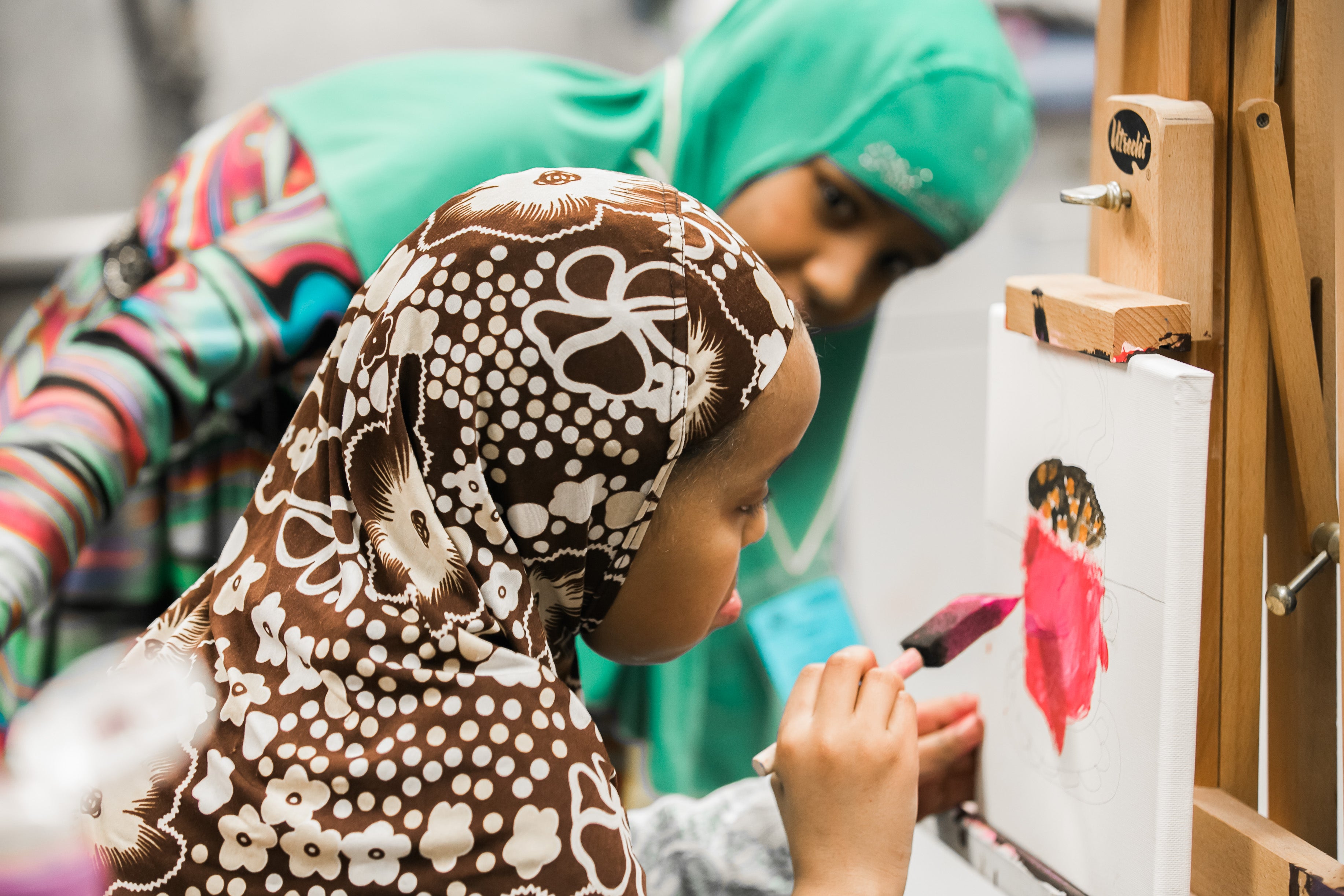
When arts organizations are rooted in their communities, everybody wins. Organizations rooted in communities of color in particular play critical roles in their neighbors’ lives. But what does this work look like in practice?
Since 2022, Wallace’s research fellows have documented the histories and practices of arts organizations participating in the Advancing Well-Being in the Arts initiative. Their results are published in a series of briefs, each following the crucial role grantees play in their respective communities.
In the historically-Black Bedford-Stuyvesant neighborhood of Brooklyn, N.Y., the Laundromat Project (the LP) has spent the past two decades using artist residency programs and community engagement efforts to deepen relationships among neighbors. In 2020, after holding a series of listening sessions, The LP secured a storefront on the neighborhood’s historic Fulton Street thoroughfare to serve as an anchor in the rapidly gentrifying community.
Theater Mu was established in 1992 in the Twin Cities to provide a space for Asian American artists to create and perform new works. The theater continues to play an important role in developing artists and local and national arts leaders, expanding Mu’s impact in the national arts ecosystem. The fellow’s ethnographic research suggests that having a space dedicated to Asian American artists provides a sense of belonging and opportunity, allowing artists to express themselves authentically and creatively.
Chicago Sinfonietta is an orchestra founded in 1987 by composer Paul Freeman. Its mission is to champion diversity, equity, and inclusion by creating community through bold symphonic experiences. The research fellow found that preserving and understanding the histories of Black-founded and -led organizations may help support future leaders and staff members as organizations continue to grow.
Based in San Francisco, Queer Women of Color Media Arts Project (QWOCMAP) has made filmmaking more accessible to queer women of color for over 25 years. The organization works toward their goal of increasing accessibility and representation in the film industry by offering classes, workshops, and screening opportunities to LGBTQIA+ filmmakers of color.
In addition to these examples, Wallace’s other Arts grantees continue to support their communities in a variety of ways—all while facing distinct structural disadvantages, such as a lack of funding from governments and philanthropies. The full series of briefs is available here. The fellows’ research also served as the basis of a 2026 report from The Social Science Research Council, analyzing cross-cutting themes in their ethnographic work.