
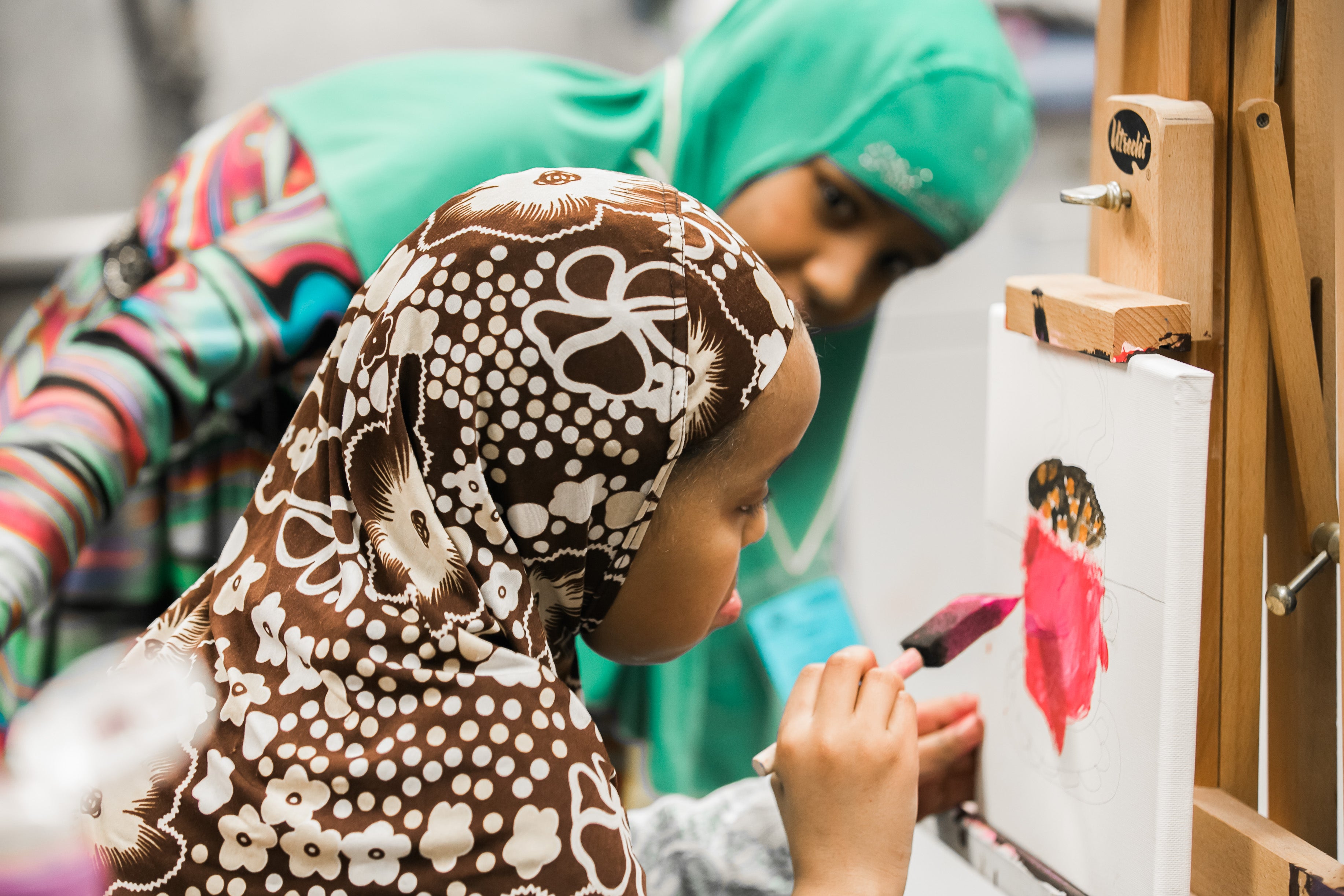
For many young people, the arts are more than an outlet for creativity. They’re a source of healing, connection, and belonging. As researchers from the RAND Corporation found in a 2025 literature review, research on youth well-being and the arts spans many disciplines and approaches, but one finding is clear: engagement with the arts can play an important role in supporting youth well-being.
What does research say about youth arts engagement and well-being?
The team at RAND found 177 studies linking arts engagement to increased youth well-being, scattered across literature in fields such as health, psychology, education, and others. Findings from the literature review identified five complex, interrelated mechanisms that promote well-being through youth arts programming.
5 ways the arts can support youth well-being
- Agency: The researchers identified building youth agency as a means of driving positive social change, helping participants in youth arts programs develop innovative solutions, advocate for policy change, and take direct action to address social problems.
- Healing: The literature review found that available, accessible, and relevant wellness and care opportunities that meet the needs of the community they serve are essential to facilitating healing and wellness. This was primarily achieved through creative arts therapies, though other means included aerobic activity, listening to music, and practicing art.
- Self-Expression: According to the researchers, encouraging youth self-expression involves creating opportunities for youth to express feelings, thoughts, or ideas through painting, drawing, writing, or other arts. Self-expression can help youth to process difficult experiences, build autonomy, and create strong relationships.
- Social Connections: The researchers characterize creating social connections and community as youth feeling close and connected to others and to the communities in which they live. Arts engagement was shown to have helped improve intergenerational relationships between young people, the adults in their lives, and even their peers through improving compassion towards others and providing an outlet for processing difficult emotions and experiences.
- Skills Mastery: According to the researchers, beliefs that intelligence is not fixed and that youth can develop the skills needed to be happy and successful are foundational to fostering a mastery mindset. The literature revealed that youth arts programs helped participants develop vocational skills, as well as advancing public speaking, problem solving, self-care, critical thinking, communication, and cognition.
These five mechanisms are meant to interact with one another. Sixty-four percent of the articles reviewed discussed more than one dimension of well-being, revealing the importance of multiple approaches to improve youth outcomes.
What this means for youth arts programs
The literature review also highlights seven opportunities to deepen research and practice around youth arts engagement and well-being. For example, the researchers call for stronger cross-disciplinary collaboration, more equitable access to arts opportunities, and innovative approaches to studying how the arts shape young people’s development and sense of belonging.
Click here to learn more about Wallace’s work in youth arts, arts education, and how creative opportunities can support young people’s well-being.