Preparing Students for What Comes Next
Educator and Student Perspectives on Career-Connected Learning in K–12 Schools

- Author(s)
- Benjamin K. Master, Melissa Kay Diliberti, Cristina Alvarez, AK Keskin, and Elizabeth D. Steiner
- Publisher(s)
- RAND Corporation
- DOI Link
- https://doi.org/10.7249/RRA5137-1
Summary
How we did this
The authors analyzed data from RAND’s American School District Panel, the American School Leader Panel, and the American Youth Panel. The surveys capture responses from district and school leaders and youth to examine the state of career-connected learning in K-12 schools, and students' experiences with that programming during the 2025-2026 school year.
Schools and school districts often provide career-connected learning and support for K-12 students, but how well does it prepare them to navigate college and career pathways? A group of RAND researchers set out to understand how school and district leaders structure the career-connected learning opportunities they offer students—and how current high school students describe their experiences with those opportunities and the quality of guidance that they receive.
The team gathered 2025-2026 data from district and school leaders in the American School District and School Leader Panel surveys. They collected student survey data from the American Youth Panel.
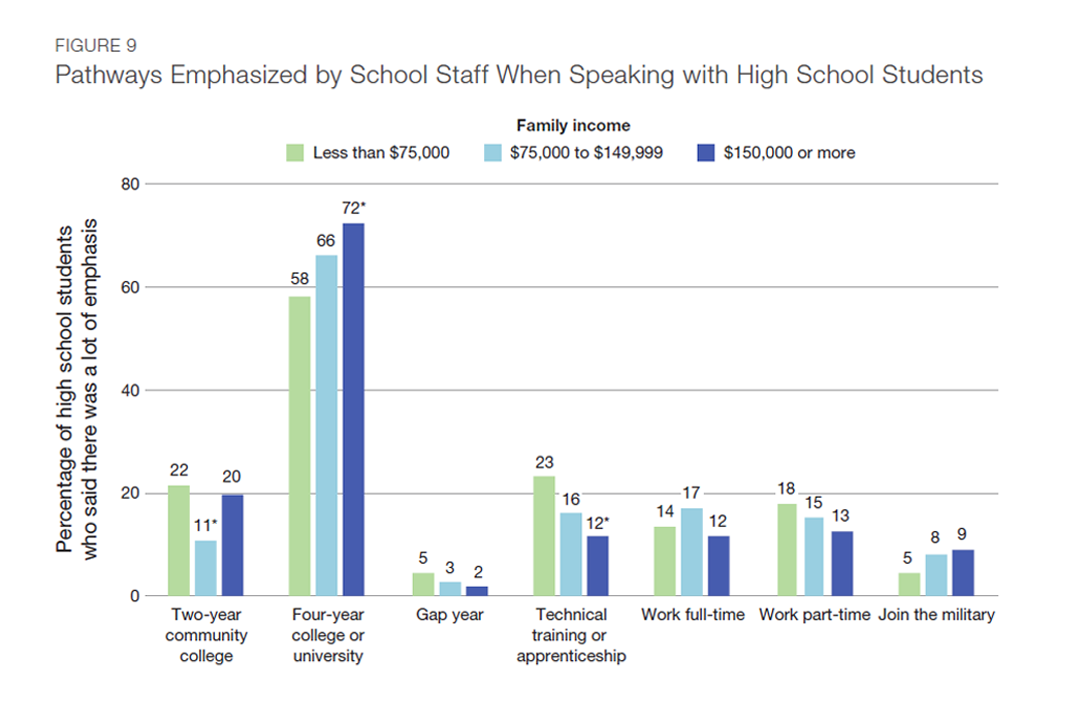
Overall, the team found that schools continue to emphasize pathways to a four-year college over other options. For students who do not want to pursue a bachelor’s degree, this results in a more negative perception of their school’s helpfulness in postsecondary planning.
While most school and district leaders said they offer career guidance as early as middle school, almost half of students surveyed said that by the end of junior year they had neither made a post-high school plan or met with a counselor. By spring of their senior year only 39% of students said they had visited an employer or workplace, though 71% said they had planned to; only 22% participated in an internship or apprenticeship though 66% said they had planned to.
The report also notes that work-related learning tended to take the form of coursework, such as career-technical education (CTE) courses.
The research team recommends ways to close gaps between student interest and need and school and district offerings. They acknowledge the systemic challenges in doing so, including a lack of policy to facilitate stronger school-workforce partnerships.
Additionally, researchers underscore the importance of tracking student success after graduation to better understand the impact of career-connected learning opportunities in K-12. Survey respondents said current tracking is often limited in-school meetings with guidance counselors and the development of postsecondary plans.

Most districts offer work-related learning, but hands-on experiences, such as internships and apprenticeships, remain far less common, especially outside urban areas.
Key Takeaways
- Career-connected learning in high school prioritizes four-year college pathways over others like trade school.
- Students uninterested in pursuing a bachelor’s degree rated their schools’ support the most negatively. Students from lower-income families also were less likely to find their school supports aligned to their families’ financial situations.
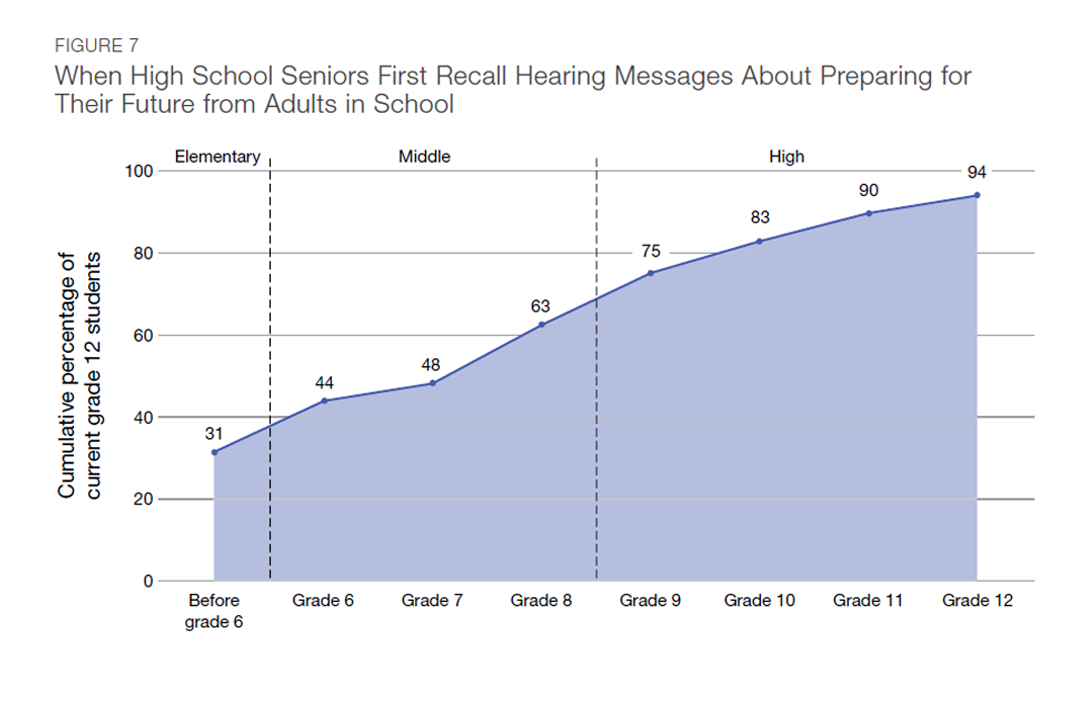
- While most school and district leaders said they offer career guidance as early as middle school, almost half of students surveyed said that by the end of junior year they had neither made a post-high school plan or met with a counselor.
- Students often plan for work-related learning, such as visiting workplaces or participating in internships, but roughly two-thirds who make these plans do not follow through.
- Few schools track whether students are accepted to college or secure employment after high school.
Visualizations