

- The Equity-Centered Principal Pipeline Initiative (ECPI) is examining how eight districts are building school leadership pipelines rooted in equity, cultural responsiveness, and long-term sustainability.
- Key findings on building principal pipelines show that strong preparation, ongoing investment and support, data-driven decision-making, and community engagement are essential for effective leadership.
- Districts in the equity-centered pipeline work are prioritizing internal capacity-building, leadership development, and storytelling to help maintain momentum beyond initial funding.
- Wallace and its partners will be developing tools, sharing insights, and supporting the field in advancing and sustaining equity-centered leadership
Systemic inequities in education have long shaped the trajectories of students, especially those from historically underserved communities. In recent years, effective school leadership has emerged as a powerful lever for addressing these disparities school and district-wide. The Principal Pipeline Initiative, supported by The Wallace Foundation, set out to explore how districts can build effective and sustainable leadership pipelines .
Lessons from the Principal Pipeline Initiative offer rich insights from six nationwide districts. These findings are pivotal, as districts and policymakers seek strategies that move beyond theory to sustainable, long-term change. This guide, which distills what we've learned and where the field might go, is grounded in the principle that there are actions and behaviors districts can do to create effective pipelines. ECPI is asking how they can weave in equity as a disciplined approach to leading, learning, and reshaping systems.
What Is Equity-Centered Leadership?
Equity-centered leadership goes beyond technical skill. Based on more than a decade of research on building principal pipelines, the equity-centered focus prioritizes fairness, cultural responsiveness, and inclusivity across all aspects of school leadership—from hiring and preparation to ongoing support. This leadership approach recognizes the influence of leaders on student achievement, teacher retention, and overall school culture.
Sustainable education leadership means knowing your community, valuing its strengths, and designing systems that close opportunity gaps. Leaders are not only instructional coaches; they are advocates, cultural navigators, and systems thinkers.
The Principal Pipeline highlights the interconnected domains that impact leadership success. The updated leadership development strategy framework emphasizes alignment across preparation programs, district systems, and community context. It also demonstrates the shift from one-size-fits-all models to locally adapted, community-informed leadership strategies. By embedding equity into each of these domains, districts can develop leaders equipped to meet the needs of every student.
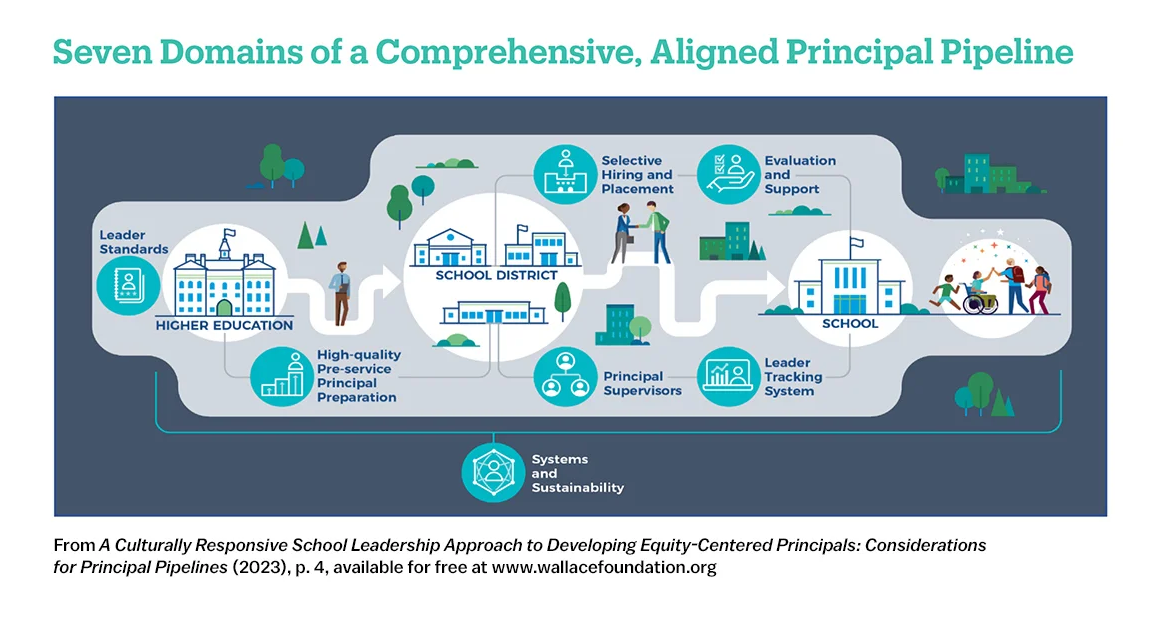
Key Findings from the Field
Several themes emerged through more than a decade of research on what makes an effective principal pipeline:
- Leadership preparation matters: Programs that integrated training produced stronger leaders. These leaders were better equipped to identify inequities, engage families, and create inclusive school environments.
- Support structures are critical: Mentoring, coaching, and peer networks help new principals stay and succeed. Leadership is often isolating; these reduce burnout and promote continuous learning.
- Data use is key to principal effectiveness. Districts that used data to identify opportunity gaps made more targeted improvements. Tracking teacher retention, student absenteeism, discipline disparities, and student access to advanced coursework is included.
- Community engagement strengthens outcomes: Leaders who built trust and partnerships with families saw gains in attendance, school climate, and academic performance.
In several cases, leaders used real-time data to adjust professional development offerings, engage families in school redesign efforts, or improve incoming staff's hiring and onboarding process. These aren't just administrative functions; they’re roadmaps for training and guideposts for working to get right.
Explore more interactive tools, including data maps and district snapshots.
Voices from the Districts
The story of equity-centered leadership lives in the experiences of the educators and communities doing the work. When we center these voices, we gain a clearer picture of what’s possible and what it takes to get there.
These stories reinforce the same truth: equity-centered leadership must be tailored to context and co-owned by communities.
Lessons in Sustainability
Sustainability is top of mind. Districts that have built strong principal pipelines shared several practices that have helped them keep the work going:
- Technical assistance helped districts build internal capacity: Rather than relying solely on external consultants, districts embedded expertise in HR, professional development, and school improvement.
- Storytelling and visibility efforts positioned district leaders as advocates for young people. Superintendents and principals create trust and accountability.
- Investments in leadership development created continuity amid staff turnover: Multiple districts used "leadership academies" to cultivate assistant principals and teacher leaders into future principals.
Challenges remain. Funding constraints, inconsistent policy environments, and siloed efforts can all threaten long-term success. Some districts expressed concern about the loss of momentum without dedicated funding. Others are navigating shifts in state leadership that deprioritize equity. Still, many districts are taking deliberate steps to own and evolve this work—establishing permanent equity offices, embedding leadership development into strategic plans, and formalizing community feedback mechanisms.
What’s Next for the Field
The future depends on the field’s ability to continue learning, adapting, and scaling what works. Several next steps are emerging:
- New research and tools: Wallace and its partners are developing practical resources that districts can use to assess and improve their pipelines. These include reflection tools, updated pipeline frameworks, and equity audit templates.
- Policy alignment: States have integrated effective leadership practices into licensure, evaluation, and funding formulas. Several are reviewing how preparation programs get evaluated and how that aligns with local hiring needs.
- Higher education partnerships: Universities intentionally align leader prep with district goals. This includes offering residency models, culturally responsive coursework, and co-designing programs with district partners.
Wallace remains committed to sharing insights and amplifying the voices of school leaders who are committed to equity in their practices. Get our report on Implementing for Sustainability
Frequently Asked Questions
Q: What is equity-centered school leadership?
A: Equity-centered leadership prioritizes fairness, cultural responsiveness, and inclusivity in hiring, preparation, and support practices, especially for students who have historically faced economic barriers.
Q: What is the Equity-Centered Pipeline Initiative (ECPI)?
A: ECPI is a multiyear initiative The Wallace Foundation supports to help districts build leadership pipelines that reflect and advance equity goals.
Q: How many districts are participating in ECPI?
A: Eight districts across the U.S. are participating, representing a range of sizes and contexts.
Q: What is Wallace's role in ECPI?
A: Wallace supports districts with tools, technical assistance, and storytelling to help them implement and sustain their efforts.
Q: How can equity-centered leadership be sustained over time?
A: Sustainability requires internal capacity building, consistent investment in leadership development, strong community partnerships, and policies that reinforce equity and principal effectiveness as strategic priorities. pay and benefits was one of the most common improvements workers said they need.