
Preserving Cultural Histories and Stories
A study of BIPOC-centered arts organizations’ archival needs
This brief illustrates the importance of safeguarding the legacies of arts organizations rooted in communities of color
May 2026
2 Min Read

Table of Contents
Overview
More
Less
Overview
More
Less
Ideas In Practice
Document
- Publisher(s)
- The Wallace Foundation
Page Count
2 pages
Summary
How we did this
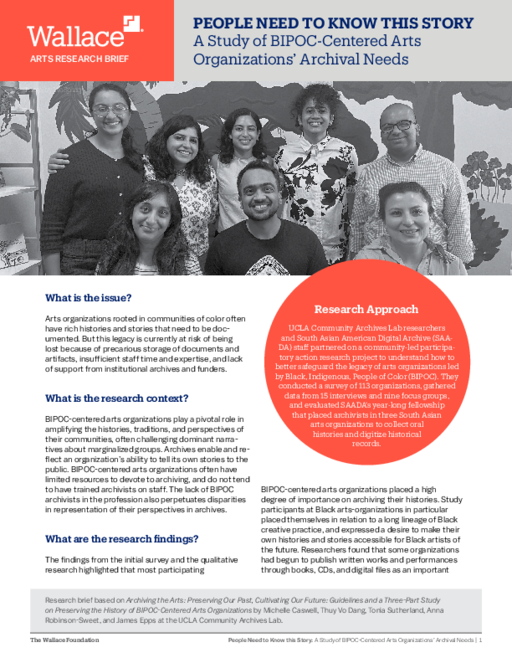
Researchers from the UCLA Community Archives Lab and staff from the South Asian American Digital Archive (SAADA) partnered together on a community-led research project to better understand how to safeguard the legacy of BIPOC-led arts organizations. The team surveyed 113 organizations. They gathered data from individual interviews and focus groups, and reviewed records from SAADA’s fellowship program.
Arts organizations rooted in communities of color often have rich histories. But their legacies are often at a risk of being lost because of lack of support from institutional archives and funders, insufficient staff expertise and time, and precarious storage methods.
Researchers from the UCLA Community Archives Lab and staff from the South Asian American Digital Archive (SAADA) sought to better understand what type of archival practices currently exist within arts organizations rooted in communities of color. In addition to a deeper understanding of the deep importance organizational histories are to both organization and community members, the study also highlighted a desire to make their histories known and accessible for Black artists of the future.
The findings show how archival institutions and funders can better support organizations to bolster their own histories, and the need for better training of archivists rooted in communities of color.
This brief is based on Archiving the Arts: Preserving Our Past, Cultivating Our Future: Guidelines and a Three-Part Study on Preserving the History of BIPOC-Centered Arts Organizations written by Michelle Caswell, Thuy Vo Dang, Tonia Sutherland, Anna Robinson-Sweet, and James Epps.

Black arts-organizations in particular placed themselves in relation to a long lineage of Black creative practice and expressed a desire to make their own histories and stories accessible for Black artists of the future.
Topics:
Now Viewing:
Overview
Next: Ideas In Practice