
Understanding the Landscape of Professional Learning for School Principals

- Author(s)
- Jason A. Grissom, Morgaen L. Donaldson, Jessica G. Rigby, Michelle Doughty, and Stephanie R. Forman
- Publisher(s)
- Vanderbilt University
Summary
How we did this
Researchers conducted 63 hour-long interviews of public school principals in three states, asking them about the formal professional development opportunities they receive from their districts and about the informal learning opportunities they seek out on their own. The researchers also partnered with RAND to survey almost a thousand principals, from all 50 states, on their professional learning experiences. The team held subsequent interviews with district leaders.
Since the 1970s, researchers have found that the most effective public schools tend to be led by highly skilled principals. Less clear, though, is what it takes to help principals learn to be successful leaders.
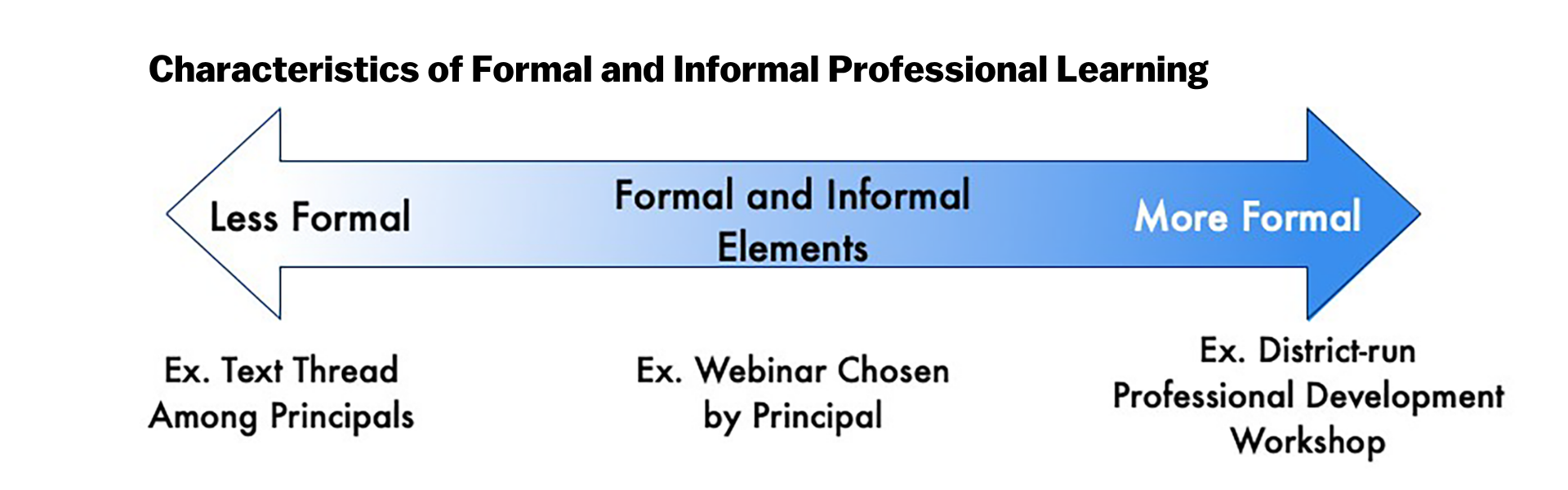
In this study, researchers set out to understand the landscape of professional learning for school leaders and to generate greater interest in principal learning across policy, practice, and research settings. Importantly, they distinguish between formal professional development opportunities and informal professional learning opportunities, finding that principals themselves prefer the latter while district leaders express concern related to quality control.
The current work follows up on a 2022 report commissioned by Wallace, Developing Effective Principals: What Kind of Learning Matters? In that study, Linda Darling-Hammond and colleagues reviewed two decades of research in this area, concluding that high-quality professional development programs that feature relevant content, real-world learning, mentoring, and peer collaboration tend to result in better school leadership and, in turn, better outcomes for students. But most of that research has focused on the preparation of new principals. Less is known about the ways in which principals continue to develop their knowledge and skills throughout their careers.
The present study addresses that gap by asking veteran school principals to share information about their in-service learning opportunities, including the frequency of those opportunities, their subject matter, and their usefulness. As in previous studies, principals reported what they learned from the formal professional development programs provided by their districts and states, as well as the many kinds of informal learning opportunities principals said they choose to seek out on their own.
Key findings include:
- In every part of the country, school principals engage in formal professional development programs provided by the district or state. Many cited participating in principals networks, attending workshops, or being coached by principal supervisors as examples. However, they reported more frequent participation in various kinds of informal learning, such as seeking advice from colleagues, reading journal articles, attending conferences, visiting nearby schools, and listening to podcasts.
- Principals tended to describe informal learning opportunities as more relevant and responsive to their immediate learning needs.
- District and state officials expressed concerns about the quality of the informal learning that principals choose to pursue on their own.
- Principals said they most highly value those learning opportunities that allow them to meet, exchange ideas with, and build relationships with other principals, reducing the sense of professional isolation that many experience on the job.
- Principals said that the most common, and useful, topic for professional learning is instructional leadership, or helping teachers to improve their instruction.
- Principals said that they have relatively few opportunities to learn about other leadership practices that researchers have found to be critically important, including building collegial relationships among teachers and staff, maintaining a safe and productive school climate, managing school resources strategically, and ensuring that all students have equal opportunities to learn.
- Principals’ learning opportunities vary somewhat by location, years-of-service, and race. Specifically, rural principals reported having fewer learning opportunities than their urban counterparts reported. Early-career principals said they have more opportunities than their more senior colleagues said they have. Black principals said they have more coaching and mentoring opportunities than principals of other races said they have. These differences were not explained by where leaders were employed.
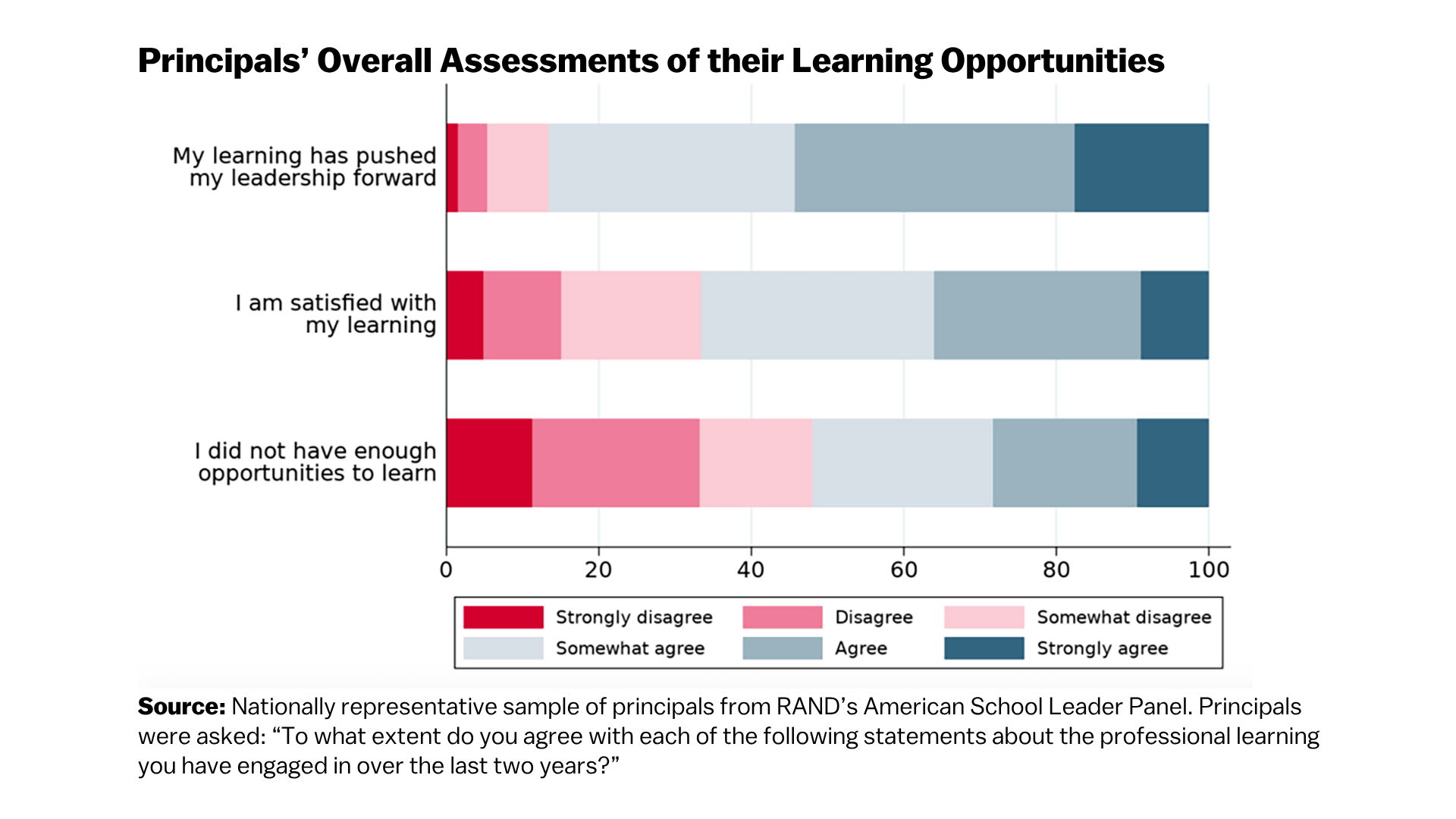
- Two-thirds of principals said they feel satisfied overall with their professional learning opportunities. Still, about half said they don’t have enough learning opportunities, and many said that it’s hard to fit professional learning into their crowded schedules.
These findings have a number of implications for policy and practice. For example, districts could update and improve their professional learning programs based on regular feedback from principals. States and districts could also provide informal opportunities such as curated lists of high-quality journal articles, professional meetings, webinars, and university courses on a wide range of topics. Further, districts should review the content of their principal support programs, asking whether they’ve over-emphasized the topic of instructional leadership, at the expense of helping principals learn about teacher and staff collaboration, school climate, strategic management, and learning for equity.

Even the best pre-service programs are unlikely to fully prepare principals to meet all the demands of the role. To become and remain effective over time, principals need ongoing professional support and learning opportunities.
Key Takeaways
- School districts provide principals with regular opportunities to participate in peer networks, workshops, coaching sessions, and other kinds of formal professional development. Even more common for principals are the informal professional learning opportunities that they seek out on their own.
- Principals tend to value their informal learning opportunities more highly than their formal professional development programs, seeing them as more relevant. But district and state leaders express concerns about the quality of informal learning experiences.
- Principals tend to have frequent opportunities (both formal and informal) to learn about instructional leadership, which researchers have found to be critically important to school effectiveness.
- Principals have relatively few opportunities to learn about some other equally important topics: building a productive school climate, facilitating teacher collaboration, practicing strategic management, and promoting equitable student outcomes.
Visualizations
What We Don't Know
This study reveals how often principals seek out informal learning opportunities, the kinds of activities in which they engage, and the extent to which they value those opportunities. However, the study does not speak to the actual quality of the articles principals have chosen to read, the courses they’ve taken, the podcasts they’ve listened to, the meetings they’ve attended, and so on.
Nor is it possible to say whether informal learning opportunities complement or clash with the professional development programs offered by district leaders. Are those activities well-designed and facilitated? Are they consistent with what researchers have discovered about effective school leadership? Or are district and state leaders right to worry that principals may be choosing to pursue learning opportunities that are sub-par, or that run afoul of existing policy priorities?
In order to determine whether such informal learning opportunities are in fact as valuable as principals believe, researchers will have to take a deeper look at the specific learning activities in which principals choose to participate.