

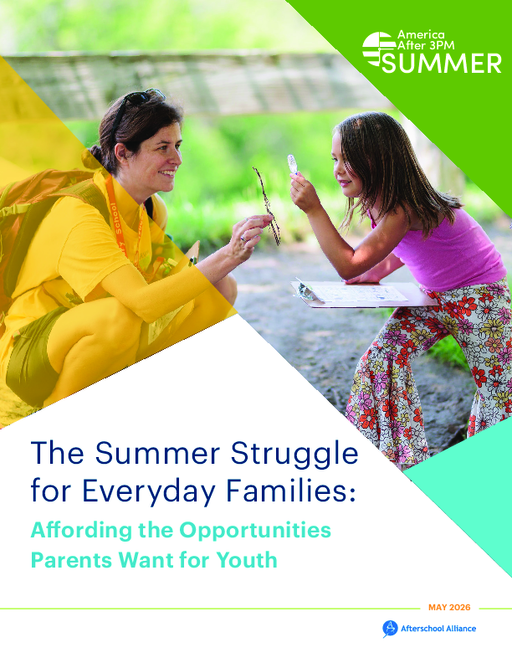
The Summer Struggle for Everyday Families
Affording the Opportunities Parents Want for Youth
The latest America After 3PM special report offers an in-depth view of parents’ priorities for their children’s summers.
May 2026

Table of Contents
Document
- Publisher(s)
- Afterschool Alliance
Page Count
37 pages
WHO IS THE WALLACE FOUNDATION?
We are an independent research foundation helping communities build a more vibrant and just future. We work in the arts, education, and youth development sectors. With our partners and grantees, we seek to solve problems and improve people's lives. The evidence-based research we share supports policymakers and practitioners working to enhance community vitality and help all people reach their full potential. Learn more about our focus areas.
Summary
How we did this
The study findings are based on a nationally representative survey of 30,515 U.S. parents about summer 2024. Participants were randomly selected adults who are parents or guardians of a school-age child who lives in their household.
Summer is an opportunity for exploration and growth—young people outside, making new friends, trying new things, and deepening their skills. But for many parents today, summer can bring on stress and worry about whether they'll be able to find and afford the opportunities they want for their kids.
This report dives into the unmet demand for summer learning programming and provides new insights into parents’ attitudes and priorities related to summer learning. The Afterschool Alliance's 5th edition of America After 3PM, conducted with Edge Research, provides insight into the existing barriers preventing many families, particularly those earning low to middle incomes, from participating in summer learning opportunities.
The survey finds that the parents of 24.6 million children want structured summer experiences, such as a summer enrichment or sports program, summer camp, summer school, or job or internship, for their child. Yet half (51 percent) of these children are left out of programming.
Affordability remains the most significant barrier to summer learning accessibility. Almost 4 in 10 families identified cost as a key barrier to enrolling their child in a summer learning program. Low-and middle-income families are much more likely than high-income families to say that cost was a factor in their decision not to enroll their child in a program. Low- and middle-income families are also twice as likely as high-income families to report that summer programs are not available in their community.
The study also examines parent attitudes about summer learning. Parents identified safety and program staff as the most important factors in selecting a program for their child. And time outdoors, being active, less time on screens, opportunities to build confidence, and participation in a variety of activities are higher on parents’ summer list of priorities compared to the school year.
Support for public funding for summer programs is strong, with a majority of parents (89 percent) expressing support for these opportunities. This support crosses demographic and political lines. Additionally, across demographic, political, and race/ethnicity lines, the majority of parents agree that all young people deserve access to quality afterschool and summer programs.
For more data on afterschool, summer learning, and resources, visit America After 3PM. This America After 3PM special report is based on research funded by The Wallace Foundation. The full America After 3PM report was made possible through partnership with the New York Life Foundation.

Too many young people are missing out on the transformative experiences summer programs provide—where they are able to explore, be creative, form long-term friendships, and build their confidence.
Key Takeaways
- Summer opportunities remain out of reach for millions of children. Parents of 24.6 million children want structured summer experiences for their kids, yet half are unable to participate. Cost is the biggest barrier, particularly for low- and middle-income families.
- Similar to afterschool, safety and program staff were most important to parents when selecting a program. But for summer learning programming, enriching activities such as time outdoors, a variety of enriching and fun activities, and less screen time rank higher on parents’ priorities.
- Parents whose children are enrolled in summer learning programming were highly satisfied by their experience and felt confident in their child’s academic preparedness for the upcoming school year.
- Regardless of political affiliation or demographics, parents support increased summer learning opportunities for all children and public funding for programming, a trend that is increasing from 83 percent in 2009 to 89 percent in 2024.
Visualizations


Materials & Downloads
You May Also Like
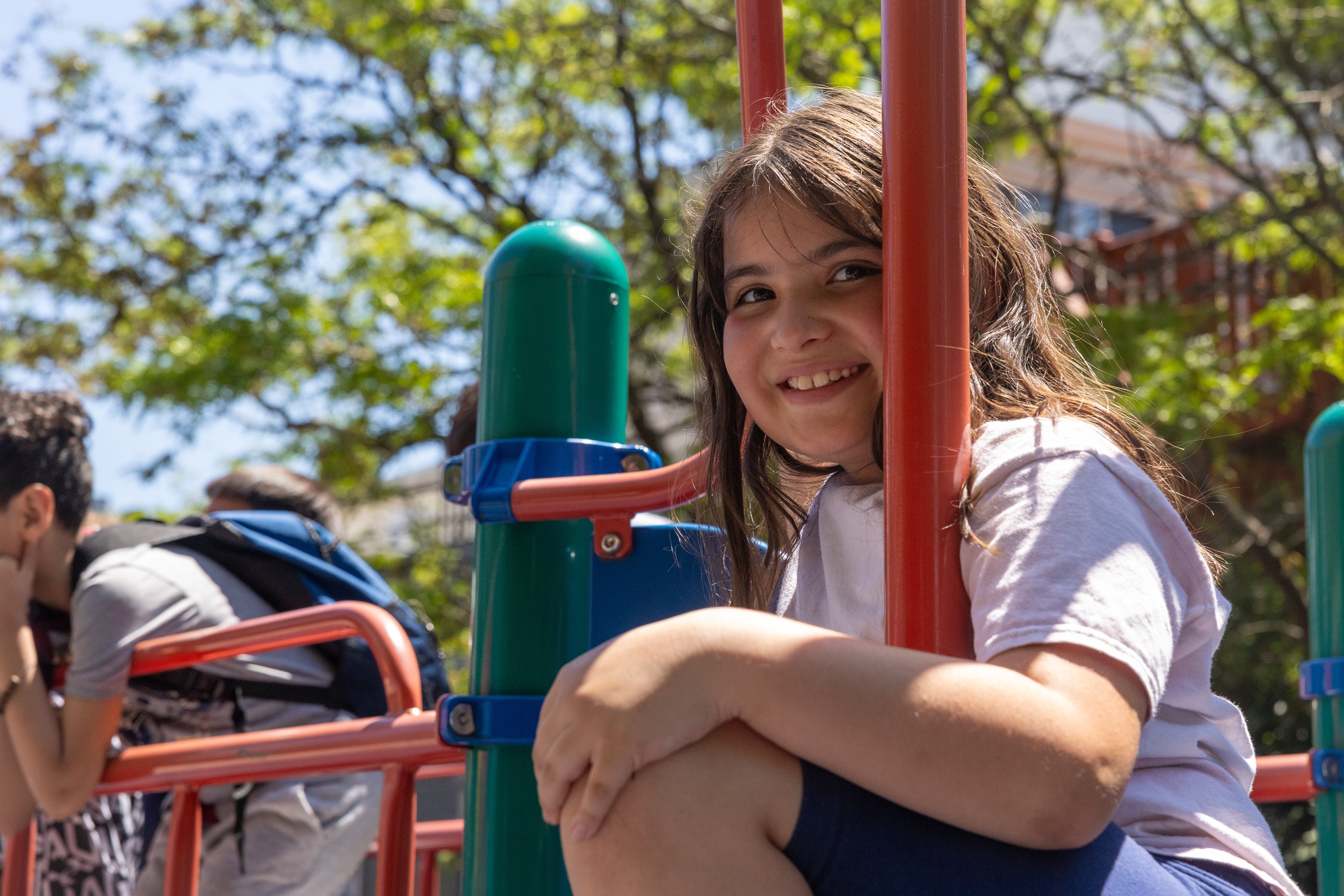
What Can a Summer Learning Program Look Like?
Over 100 districts nationwide are crafting unique summer learning programs that keep students engaged
Report

What Does Brain Science Tell Us About Adolescence?
How adolescent brain development shapes risk-taking and learning—and why relationships, exploration, and access to out-of-school-time opportunities matter
Report

Sustaining Momentum on Summer Learning
This research brief from the District Summer Learning Network Study offers strategies for sustaining progress on summer learning
Report
Topics:
Now Viewing:
Overview
Next: Research Approach